
In real estate, it’s a common—and often frustrating—scenario: two homes sit in the same neighborhood, sometimes even on the same street, yet one sells quickly while the other lingers on the market. Many homeowners assume it comes down to luck, but in reality, there are several strategic and measurable factors that influence how quickly a property sells.
Understanding these differences can help sellers position their home more competitively and ultimately achieve a faster, more profitable sale.
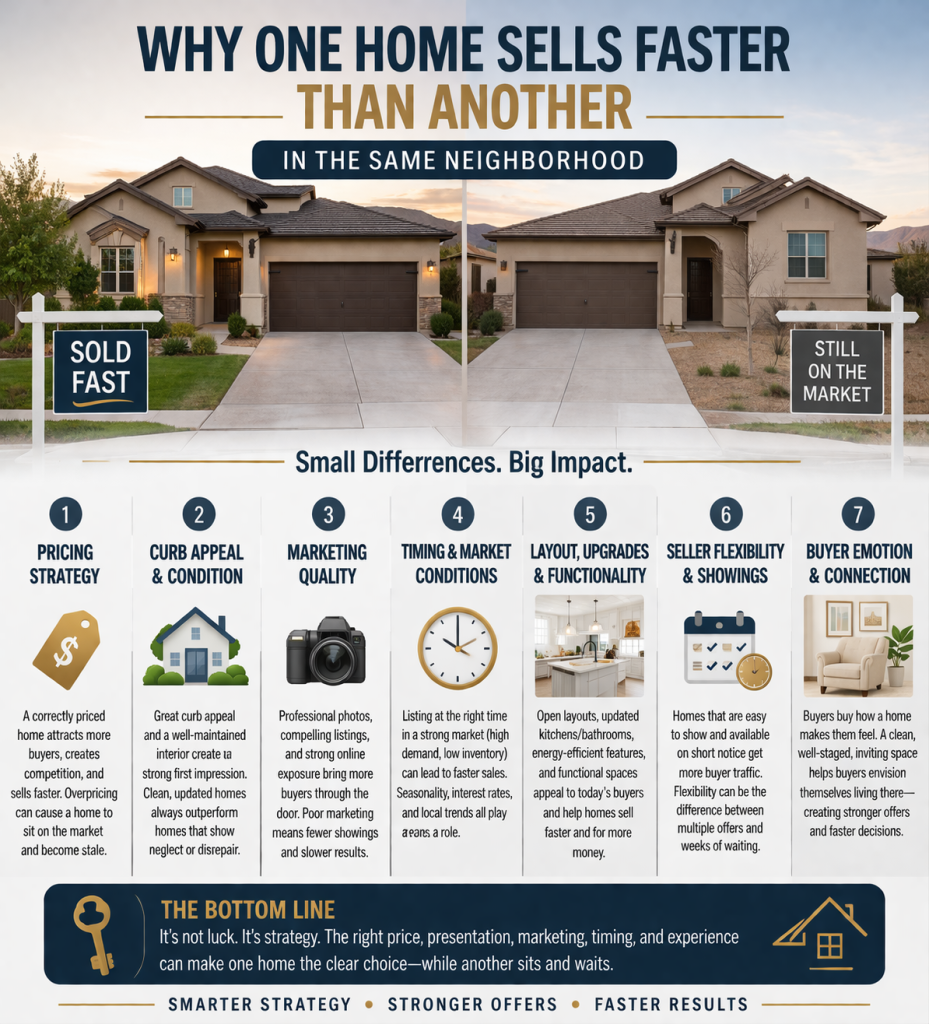
1. Pricing Strategy Matters More Than Anything
The number one reason a home sells faster than another is pricing. Even in identical neighborhoods, buyers are highly sensitive to perceived value. A home priced correctly from the beginning will attract more attention, generate stronger interest, and often receive multiple offers.
On the other hand, a home that is overpriced—even slightly—can sit on the market, becoming stale. Once a listing lingers too long, buyers may assume there’s something wrong with it, even if there isn’t.
Strategic pricing isn’t about aiming high and negotiating down; it’s about positioning the home at or just below market value to create urgency and competition.
2. First Impressions: Curb Appeal and Condition
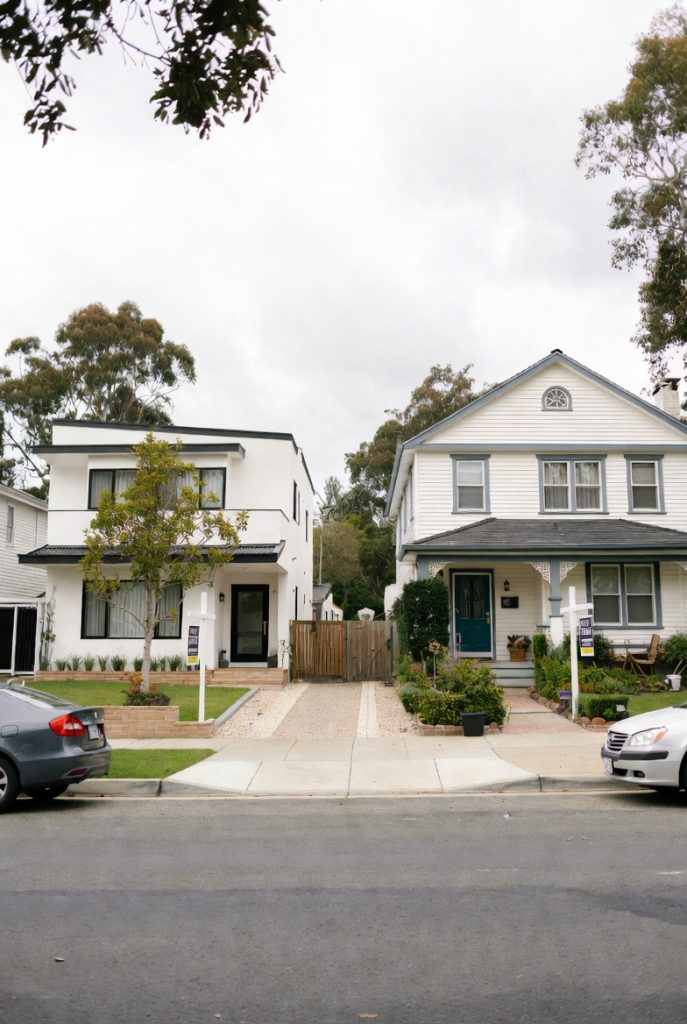
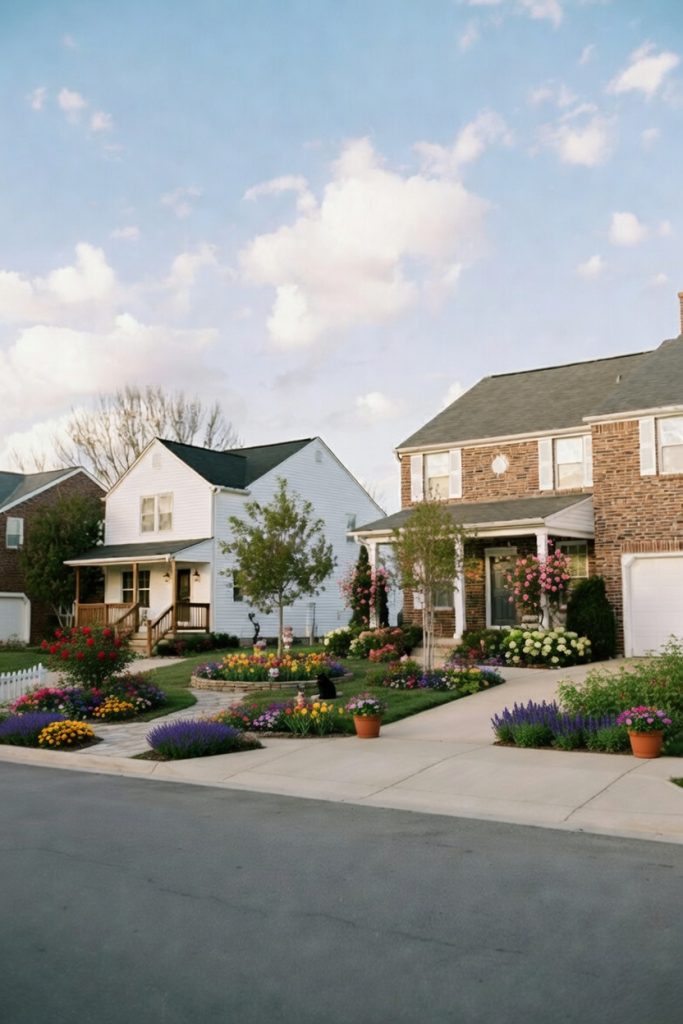
Buyers begin forming opinions before they even walk through the front door. Homes with strong curb appeal—clean landscaping, fresh paint, and a welcoming exterior—immediately stand out.
Inside, condition plays a major role. A home that is clean, decluttered, and well-maintained will always outperform one that feels neglected. Small updates like modern fixtures, fresh paint, and minor repairs can dramatically affect a buyer’s perception.
In contrast, homes that require visible work may still sell, but typically take longer and often at a lower price point.
3. Presentation and Marketing Quality
In today’s digital-first world, most buyers see a home online before ever stepping foot inside. This makes marketing one of the most critical components of a fast sale.
High-quality professional photography, compelling listing descriptions, and strong online exposure can significantly increase showing activity. Homes that are staged—either physically or virtually—also tend to photograph better and help buyers emotionally connect with the space.
A poorly marketed home, even in a desirable neighborhood, may be overlooked simply because it doesn’t stand out online.
4. Timing and Market Conditions
Even within the same neighborhood, timing can influence how quickly a home sells. A property listed at the right moment—when buyer demand is high and inventory is low—has a natural advantage.
Seasonality also plays a role. For example, in Arizona, the market often sees increased activity during cooler months when out-of-state buyers are actively searching.
Interest rates, economic conditions, and local demand trends can further impact how quickly homes move.
5. Layout, Upgrades, and Functionality
Not all homes in a neighborhood are created equal. Differences in floor plans, lot sizes, upgrades, and functionality can significantly impact buyer interest.
Homes with open-concept layouts, updated kitchens, modern bathrooms, and energy-efficient features tend to sell faster. Additionally, practical elements like storage space, home offices, and outdoor living areas are increasingly important to today’s buyers.
Even subtle differences—like natural light or room flow—can influence a buyer’s decision.
6. Seller Flexibility and Showing Availability
Sometimes, the speed of a sale comes down to logistics. Homes that are easy to show and available on short notice tend to receive more traffic.
If a seller restricts showing times or requires extensive notice, it can limit buyer access and slow down the process. The more accessible a home is, the more opportunities it has to attract the right buyer quickly.
7. Buyer Psychology and Emotional Connection
Real estate is not purely logical—it’s emotional. Buyers often choose homes based on how they feel when they walk through the door.
A well-staged home that feels warm, inviting, and move-in ready can create an immediate emotional connection. That connection often leads to faster offers and stronger terms.
Conversely, a home that feels cold, cluttered, or overly personalized may make it harder for buyers to envision themselves living there.
BOTTOM LINE
When two homes in the same neighborhood perform differently on the market, it’s rarely random. Pricing, condition, marketing, timing, and buyer perception all work together to influence how quickly a property sells.
The key takeaway for sellers is this: success is not about chance—it’s about strategy. By understanding and optimizing these factors, homeowners can significantly improve their chances of selling quickly and at the best possible price.
Market value is ultimately determined not by what a seller believes their home is worth, but by what a buyer is willing to pay in current market conditions. An appraisal serves as an objective benchmark, often validating—or challenging—that price. While this dynamic can feel like a challenging cycle, it’s important to remember that real estate markets are inherently cyclical, with values continually adjusting based on supply, demand, and broader economic trends. Let’s connect!





 EN
EN
 ES
ES