

You may have seen talk online that new home inventory is at its highest level since the crash. And if you lived through the crash back in 2008, seeing new construction is up again may feel a little scary.
But here’s what you need to remember: a lot of what you see online is designed to get clicks. So, you may not be getting the full story. A closer look at the data and a little expert insight can change your perspective completely.
Why This Isn’t Like 2008
While it’s true the number of new homes on the market hit its highest level since the crash, that’s not a reason to worry. That’s because new builds are just one piece of the puzzle. They don’t tell the full story of what’s happening today.
To get the real picture of how much inventory we have and how it compares to the surplus we saw back then, you’ve got to look at both new homes and existing homes (homes that were lived in by a previous owner).
When you combine those two numbers, it’s clear overall supply looks very different today than it did around the crash (see graph below):
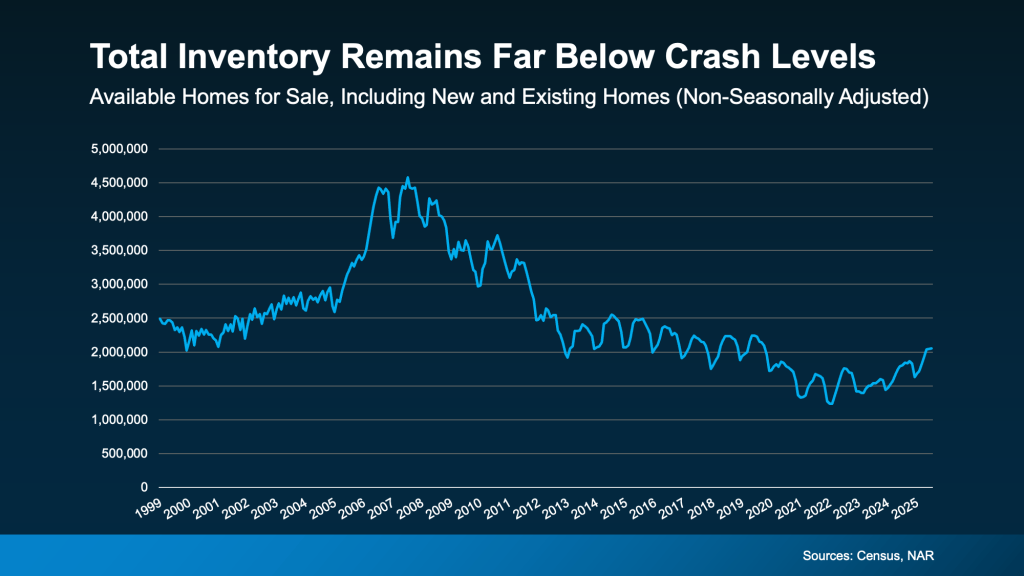
So, saying we’re near 2008 levels for new construction isn’t the same as the inventory surplus we did the last time.
Builders Have Actually Underbuilt for Over a Decade
And here’s some other important perspective you’re not going to get from those headlines. After the 2008 crash, builders slammed on the brakes. For 15 years, they didn’t build enough homes to keep up with demand. That long stretch of underbuilding created a major housing shortage, which we’re still dealing with today.
The graph below uses Census data to show the overbuilding leading up to the crash (in red), and the period of underbuilding that followed (in orange):

Basically, we had more than 15 straight years of underbuilding – and we’re only recently starting to slowly climb out of that hole. But there’s still a long way to go (even with the growth we’ve seen lately). Experts at Realtor.com say it would take roughly 7.5 years to build enough homes to close the gap.
Of course, like anything else in real estate, the level of supply and demand is going to vary by market. Some markets may have more homes for sale, some less. But nationally, this isn’t like the last time.
Bottom Line
The recent surge in new home inventory has sparked plenty of debate, but much of the conversation misses the bigger picture. While some interpret rising supply as a red flag for slowing demand or an impending downturn, the reality is far more nuanced. In many markets, more inventory simply reflects builders catching up after years of under-construction and delayed projects. At the same time, shifting demographics, evolving work patterns, and affordability challenges have altered not just how many homes people need, but also what kinds of homes they’re searching for.
It’s also important to consider that higher inventory isn’t synonymous with higher availability. Many of the new builds entering the market are priced above the reach of first-time buyers, meaning they don’t directly solve the affordability gap. Instead, they highlight an ongoing mismatch between what’s being built and what’s most needed. Rising inventory, therefore, should be seen less as an indicator of oversupply and more as a reflection of structural imbalances within the housing market.
Ultimately, the rise in new home inventory is not a one-dimensional story of cooling demand or overbuilding. It’s an adjustment period—a moment where builders, buyers, and policymakers must reconcile aspirations with realities. If addressed thoughtfully, this added inventory could be the foundation for a healthier, more balanced housing market. But misinterpreting the trend risks overlooking both the challenges and opportunities it brings. Recognizing the real drivers of this shift is the first step toward shaping effective solutions for the future of housing.
If you have questions or want to talk about what builders are doing in our area, let’s connect.





 EN
EN
 ES
ES