

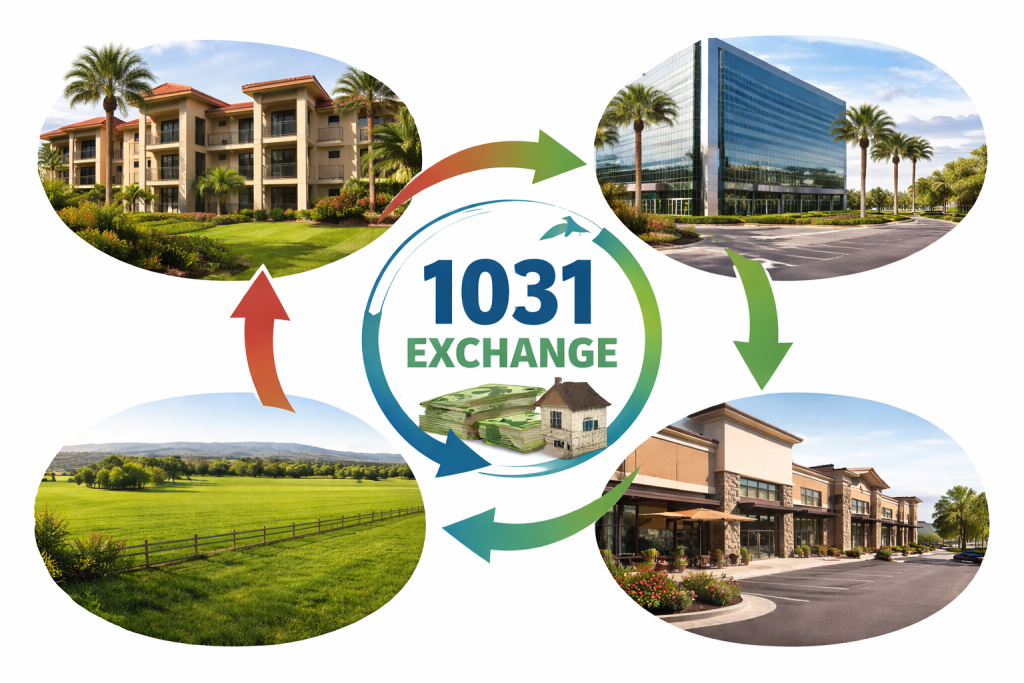
Real estate investing isn’t just about buying and selling property—it’s about strategically growing your wealth while minimizing taxes. One of the smartest tools investors use is a 1031 exchange, a tax-deferral strategy that allows you to sell an investment property and reinvest the proceeds into another like-kind property—without immediately paying capital gains taxes.
Here’s how it works: when you sell an investment property, you typically owe taxes on your profits. But with a 1031 exchange, you can roll the proceeds into a new investment property, deferring those taxes and keeping more of your money working for you. That means you can upgrade, diversify, or expand your real estate portfolio faster than you could otherwise.
✅ Like-Kind Properties
The replacement property must be similar in nature or use to the one you sell. For example, you could exchange a rental home for another rental, a commercial building, or even investment land. Personal residences don’t qualify, but the flexibility for investment properties is broad.
⏰ Strict Timelines
Timing matters. You have 45 days to identify potential replacement properties and 180 days to close on the new property. Missing these deadlines can disqualify the exchange, triggering immediate tax obligations.
🤝 Qualified Intermediary Required
You can’t touch the proceeds from the sale directly. A neutral qualified intermediary (QI) handles the funds and ensures your transaction meets IRS requirements.
💡 Why Investors Love 1031 Exchanges
- Defer capital gains taxes and reinvest full proceeds
- Upgrade or diversify your portfolio without losing equity
- Increase cash flow and long-term returns
- Strategically grow wealth over time
In today’s evolving real estate market, understanding strategic tools like a 1031 exchange can make a significant difference in how investors build and preserve wealth. Rather than allowing capital gains taxes to reduce hard-earned equity, a 1031 exchange offers the opportunity to keep those funds working—reinvesting, expanding, and compounding over time. For investors focused on long-term growth, this strategy can be a powerful way to scale portfolios, improve cash flow, and reposition assets to better align with changing financial goals.
A 1031 exchange is not simply about deferring taxes—it’s about creating flexibility. Whether upgrading from a smaller rental to a larger multifamily property, diversifying from residential to commercial, or consolidating multiple properties into one higher-performing asset, the exchange process opens the door to strategic reinvestment. When used thoughtfully and in coordination with experienced professionals, it can become a cornerstone of a well-structured investment plan.
Of course, strict timelines and IRS guidelines must be followed carefully. Success depends on proper planning, working with a qualified intermediary, and identifying suitable replacement properties within the required windows. With the right preparation, however, the benefits can be substantial.
Ultimately, a 1031 exchange empowers investors to think beyond a single transaction and focus on long-term wealth building. By deferring taxes today, you create more opportunity for growth tomorrow—positioning yourself for stronger financial stability and continued success in real estate investing.
📞 Ready to explore how a 1031 exchange could work for you? Connect with a knowledgeable real estate professional today to align your strategy, timing, and investment goals. Your next property could be your smartest move yet! Let’s connect!





 EN
EN
 ES
ES