
In today’s real estate market, many prospective buyers choose to wait—hoping for lower home prices, reduced interest rates, or improved economic conditions. While patience can sometimes be beneficial, what often goes unnoticed are the hidden costs associated with delaying a home purchase. These costs are not always obvious, but over time they can significantly impact both financial opportunity and long-term wealth building.
One of the most overlooked costs of waiting is continued rent payments. Rent provides housing but does not build equity. Each month spent renting is money that does not contribute toward ownership or long-term financial growth. In contrast, mortgage payments gradually increase ownership in an asset that historically appreciates over time. Even modest appreciation can translate into meaningful equity gains that renters miss while waiting for the “perfect” time to buy.
Another hidden cost is rising home prices. Real estate markets tend to move in cycles, but over the long term, home values have generally trended upward. When buyers wait for prices to drop significantly, they risk entering a market where prices have continued to climb instead. Even small annual increases can add thousands of dollars to the purchase price, requiring a larger down payment and higher monthly payments later.
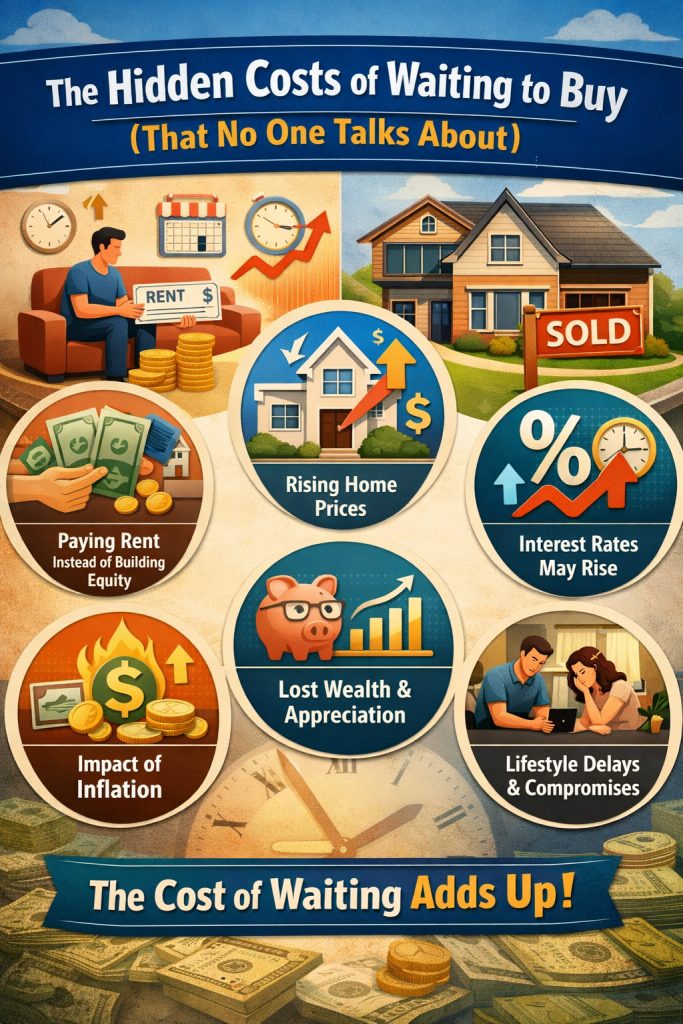
Interest rates also play a critical role. Buyers often delay purchases, hoping rates will fall, but rate movements are unpredictable. While waiting for a lower rate, home prices may increase enough to offset any potential savings. Additionally, buyers who purchase sooner often have the option to refinance later if rates decline, allowing them to benefit from both earlier price points and future rate improvements.
Inflation adds another layer of hidden cost. As inflation rises, so do construction costs, insurance premiums, property taxes, and rental rates. Waiting can mean paying more for the same home in the future simply because the overall cost of living has increased. Locking in a fixed mortgage payment can provide stability and protection against rising housing expenses, something renters rarely experience.
There is also an opportunity cost tied to delayed appreciation and wealth building. Homeownership has long been one of the primary ways individuals build net worth. Each year of ownership provides potential appreciation, equity accumulation, and tax advantages that cannot be recovered once missed. Waiting effectively postpones participation in that growth cycle.
Beyond finances, lifestyle costs deserve consideration as well. Many buyers delay purchasing while compromising on space, location, or amenities that better suit their needs. Whether it’s waiting to start a family, working from an inadequate home office, or postponing lifestyle improvements, these non-financial costs can affect overall quality of life.
This does not mean buyers should rush into a purchase unprepared. Financial readiness, job stability, and personal goals should always guide timing decisions. However, focusing solely on market timing can lead buyers to overlook the cumulative costs of waiting. The reality is that no one can consistently predict market peaks or valleys.
BOTTOM LINE
Ultimately, the decision to buy should be based on long-term goals rather than short-term speculation. When buyers are financially prepared and plan to remain in a home for several years, purchasing sooner rather than later often provides advantages that waiting cannot replace. Understanding the hidden costs of delay allows buyers to make informed decisions—not just about price and rates, but about opportunity, stability, and future financial growth.





 EN
EN
 ES
ES