
Renovating Your Home Before Selling: Focus on Bathrooms, Kitchens, and Flooring
Selling a home is a big decision, and preparing it for the market can significantly impact its appeal, sale price, and time on the market. Strategic renovations, particularly in high-impact areas like bathrooms, kitchens, and flooring, can make your home stand out to buyers. However, not every home needs a full overhaul, and renovations come with costs and risks. In this blog, we’ll explore the pros and cons of renovating these key areas before selling, discuss the return on investment (ROI), potential sales price differences, and outline when the condition of these spaces warrants an update.
Why Focus on Bathrooms, Kitchens, and Flooring?
Buyers prioritize bathrooms, kitchens, and flooring because these areas are central to daily living and heavily influence a home’s perceived value. A modern, functional kitchen can evoke an emotional connection, while an outdated or damaged bathroom can turn buyers away. Flooring ties the home together, affecting its aesthetic and perceived condition. Renovating these areas can make your home more competitive, but the decision to renovate depends on their current state and the local market.
Bathrooms: To Renovate or Not?
Pros of Renovating Bathrooms:
- Increased Buyer Appeal: Updated bathrooms with modern fixtures, clean lines, and neutral designs attract buyers looking for move-in-ready homes.
- Higher Sale Price: A remodeled bathroom can boost your home’s value, especially in competitive markets where buyers expect turnkey properties.
- Faster Sale: Modern bathrooms reduce buyer objections, potentially shortening the time your home sits on the market.
Cons of Renovating Bathrooms:
- High Costs: A mid-range bathroom remodel can cost $20,000–$30,000, while upscale renovations can exceed $50,000, depending on materials and labor.
- Risk of Over-Improving: Overly luxurious upgrades (e.g., heated floors or custom vanities) may not appeal to all buyers and could reduce ROI.
- Time-Intensive: Renovations can take weeks, delaying your listing and adding stress if you’re on a tight timeline.
ROI and Sales Price Impact:
- According to the 2023 Cost vs. Value Report by Remodeling Magazine, a mid-range bathroom remodel recoups about 60–70% of its cost in added home value. For example, a $25,000 remodel might increase your sale price by $15,000–$17,500.
- In a seller’s market, a dated but functional bathroom may not deter buyers, but in a buyer’s market, a fresh bathroom can justify a 5–10% higher asking price (e.g., $15,000–$30,000 on a $300,000 home).
When to Renovate: Renovate your bathroom if it’s in poor condition, such as:
- Severe Wear and Tear: Cracked tiles, stained grout, leaking faucets, or damaged vanities.
- Outdated Features: Old-fashioned colors (e.g., pink tiles), non-functional layouts, or fixtures from the 1980s or earlier.
- Mold or Water Damage: Health hazards like mold or rotting subfloors that could fail inspections.
- Market Expectations: If comparable homes in your area have modern bathrooms, an outdated one could lower your home’s competitiveness.
If the bathroom is functional, clean, and neutral (e.g., white tiles, basic fixtures), minor updates like new lighting, a fresh coat of paint, or updated hardware may suffice.

Kitchens: The Heart of the Home
Pros of Renovating Kitchens:
- Major Value Boost: Kitchens are often the first room buyers inspect. A modern kitchen with updated appliances, countertops, and cabinetry can significantly increase your home’s appeal.
- Competitive Edge: In markets with many listings, a renovated kitchen can set your home apart and attract multiple offers.
- Emotional Appeal: Buyers envision cooking and gathering in the kitchen, so a fresh, inviting space can create a strong first impression.
Cons of Renovating Kitchens:
- Expensive Investment: A mid-range kitchen remodel costs $30,000–$50,000, while upscale projects can exceed $100,000.
- Disruption: Kitchen renovations can take 6–12 weeks, making your home unlivable during the process if you’re still living there.
- Taste-Specific Risks: Trendy designs (e.g., bold colors or niche materials) may not appeal to all buyers, reducing ROI.
ROI and Sales Price Impact:
- Per the 2023 Cost vs. Value Report, a mid-range kitchen remodel recoups about 50–60% of its cost, while a minor kitchen remodel (e.g., new countertops, cabinet refacing, updated appliances) can recoup 70–80%. For a $40,000 remodel, you might see a $20,000–$24,000 increase in sale price.
- A renovated kitchen can add 5–15% to your home’s value, depending on the market. For a $400,000 home, this could mean $20,000–$60,000 more at closing.
When to Renovate: Consider a kitchen renovation if:
- Significant Damage Exists: Peeling cabinets, cracked countertops, or broken appliances that could fail inspections.
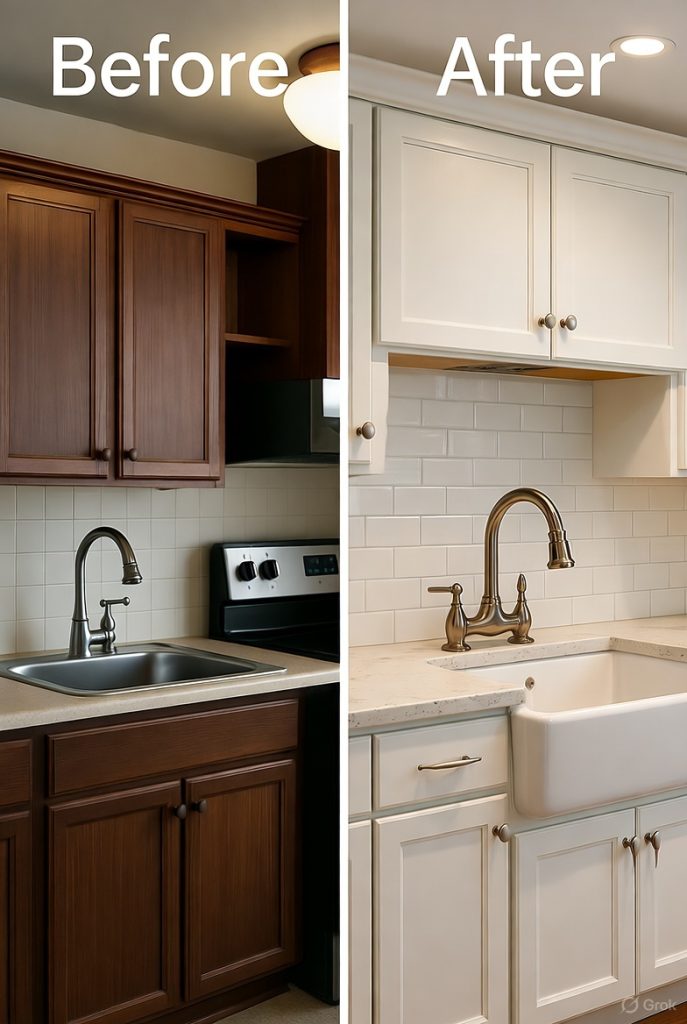
- Outdated Design: Avocado-green appliances, worn laminate counters, or layouts that feel cramped or inefficient.
- Market Demands It: If local buyers expect stainless steel appliances, quartz countertops, or open-concept layouts, an outdated kitchen could lead to lowball offers.
- Non-Functional Layout: Small, closed-off kitchens that don’t align with modern preferences for open, social spaces.
If the kitchen is functional but dated, consider cost-effective updates like painting cabinets, replacing hardware, or upgrading to budget-friendly stainless steel appliances.
Flooring: Setting the Foundation
Pros of Renovating Flooring:
- Unified Aesthetic: New flooring creates a cohesive, polished look throughout the home, enhancing first impressions.
- Broad Appeal: Popular options like hardwood, luxury vinyl plank (LVP), or neutral tile appeal to a wide range of buyers.
- Durability Signal: New flooring suggests the home is well-maintained, reassuring buyers about its overall condition.
Cons of Renovating Flooring:
- Cost Variability: Hardwood flooring costs $8–$15 per square foot installed, while LVP or tile ranges from $3–$10. A 1,000-square-foot home could cost $3,000–$15,000.
- Disruption: Replacing flooring can take days to weeks, especially if subfloor repairs are needed.
- Market Mismatch: High-end flooring (e.g., exotic hardwood) in a modest home may not yield proportional returns.
ROI and Sales Price Impact:
- New flooring typically recoups 70–100% of its cost, especially for hardwood or LVP, due to its broad appeal. For example, spending $10,000 on new flooring might increase your sale price by $7,000–$10,000.
- In competitive markets, updated flooring can add 3–7% to the sale price (e.g., $9,000–$21,000 for a $300,000 home).
When to Renovate: Replace flooring if:
- Visible Damage: Stained, warped, or torn carpets; scratched or cracked hardwood; or broken tiles.
- Outdated Materials: Shag carpeting, linoleum, or bold-colored tiles that scream “1970s.”
- Inconsistent Flooring: A mix of mismatched materials (e.g., carpet in one room, tile in another) that disrupts flow.
- Market Standards: If homes in your area feature hardwood or LVP, outdated carpet could make your home less competitive.
If the flooring is in decent shape, professional cleaning (e.g., carpet steaming or hardwood refinishing) may be enough to refresh its look.

General Considerations: When Is Renovation Necessary?
The condition of your bathrooms, kitchens, and flooring should guide your decision to renovate. Here’s a quick checklist to determine if updates are warranted:
- Functional Issues: Leaks, broken fixtures, or damaged materials that could fail inspections or deter buyers.
- Severe Aesthetic Problems: Outdated designs, bold colors, or worn surfaces that make the home feel neglected.
- Market Comparison: If comparable homes in your area have updated features, your home may need renovations to compete.
- Buyer Expectations: In high-end markets, buyers expect modern finishes; in starter-home markets, functional but clean spaces may suffice.
If your home’s features are functional, clean, and neutral, minor updates (e.g., paint, hardware, or cleaning) often provide a better ROI than full renovations. Consult a local real estate agent to understand your market’s expectations and buyer preferences.
Tips for Maximizing ROI
- Stick to Neutral Designs: Choose timeless materials like white subway tile, quartz countertops, or medium-toned hardwood to appeal to the broadest audience.
- Focus on High-Impact, Low-Cost Updates: Repainting cabinets, updating lighting, or replacing faucets can refresh a space without breaking the bank.
- Get Multiple Quotes: Compare contractor estimates to keep costs down and ensure quality work.
- Consider Partial Renovations: For example, refacing kitchen cabinets or replacing only damaged flooring sections can save money while improving appeal.
- Check Local Market Trends: In some markets, buyers prioritize specific upgrades (e.g., open kitchens or spa-like bathrooms), so tailor your renovations accordingly.
Conclusion
Renovating bathrooms, kitchens, and flooring before selling your home can boost its appeal, speed up the sale, and potentially increase the sale price. However, the decision to renovate depends on the current condition of these spaces and your local market’s expectations. If your home has significant damage, outdated designs, or features that don’t align with comparable properties, targeted renovations can offer a strong ROI—typically 50–80% for bathrooms and kitchens and up to 100% for flooring. Weigh the costs, time, and potential returns carefully, and consider consulting a real estate professional to ensure your investment pays off. With the right updates, you can make your home shine and attract the right buyer at the best possible price. We’re here to help!





 EN
EN
 ES
ES