
In every market cycle, certain phrases gain traction and spark debate among buyers, sellers, and industry professionals. One such phrase is the “pattern of control” in real estate—a concept suggesting that markets are deliberately influenced or manipulated by powerful entities. But is there truth behind this idea, or is it largely a misunderstanding of how real estate markets function?
To answer that, it’s important to separate perception from reality.
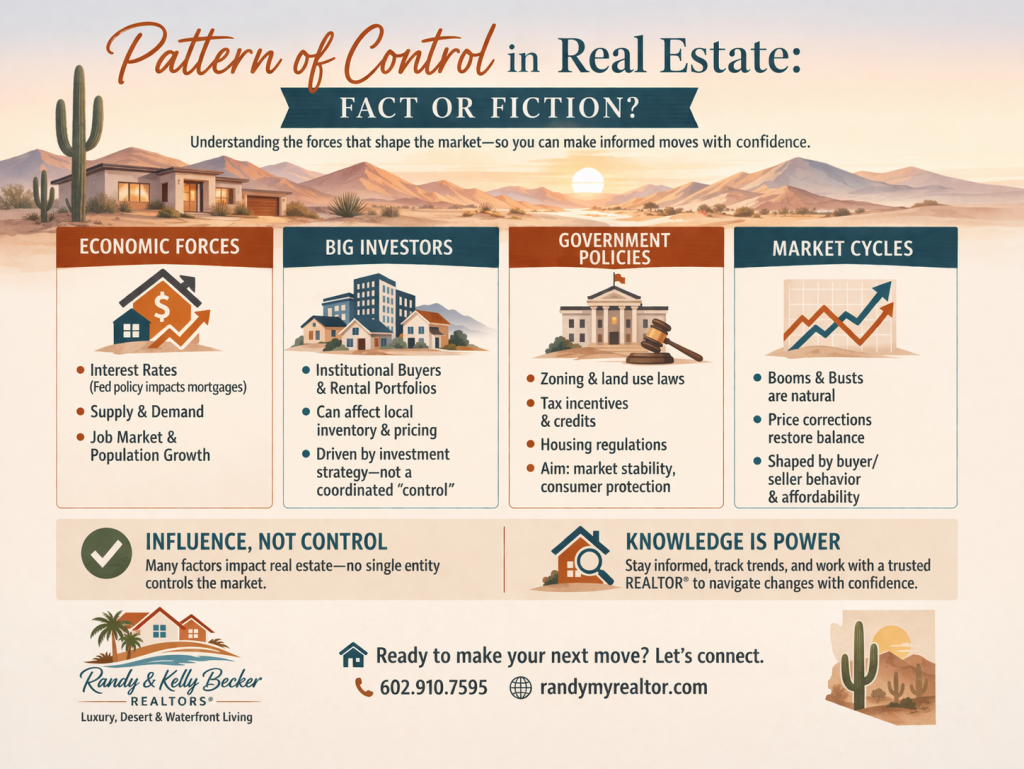
At its core, real estate is driven by fundamental economic principles: supply and demand, interest rates, population growth, employment trends, and consumer confidence. These factors create patterns—sometimes predictable, sometimes surprising—but they are not typically the result of coordinated control. Instead, they reflect the natural rhythm of a dynamic marketplace.
However, the idea of “control” doesn’t come from nowhere. There are indeed influential players in real estate, including large institutional investors, government agencies, and financial institutions. Organizations like the Federal Reserve play a significant role by adjusting interest rates, which directly impact mortgage affordability. When rates rise, borrowing becomes more expensive, often cooling demand. When rates fall, affordability improves, and buyer activity tends to increase.
Similarly, government policies—such as zoning laws, tax incentives, and housing regulations—shape the way communities grow and how housing inventory is distributed. These decisions can create the appearance of control, especially when they influence pricing or availability in certain areas. But these measures are typically designed to stabilize markets, encourage development, or protect consumers—not to manipulate outcomes for hidden agendas.

Another contributor to this perception is the rise of institutional investors purchasing residential properties. Large companies may acquire multiple homes within a market, which can affect local inventory levels and, in some cases, pricing. While this activity is real, it is not a coordinated effort to control the entire housing market. Instead, it reflects investment strategies based on opportunity, much like individual buyers seeking long-term value.
Market cycles themselves can also feel like “patterns of control.” For example, periods of rapid appreciation are often followed by stabilization or correction. This is not manipulation—it is a natural balancing process. When prices rise too quickly, affordability declines, demand slows, and the market adjusts. Conversely, when prices soften, opportunities emerge, drawing buyers back in and stimulating growth.
Media narratives and social media discussions can amplify the idea of control, especially during uncertain times. Headlines about housing shortages, rising rates, or investor activity can create a sense that the market is being directed behind the scenes. In reality, these are often overlapping factors converging at once, rather than a single coordinated force.
So, is there a “pattern of control” in real estate? The answer is nuanced. There are certainly influences—economic, institutional, and regulatory—that shape the market. But influence is not the same as control. The real estate landscape is far too complex, involving millions of independent decisions made by buyers, sellers, lenders, builders, and policymakers.
For buyers and sellers in Arizona and beyond, the most important takeaway is this: understanding the factors that influence the market is far more valuable than worrying about unseen control. Working with a knowledgeable real estate professional can help you interpret trends, navigate changes, and make informed decisions based on your unique goals.

In the end, real estate is not governed by a hidden pattern of control—it is guided by a combination of data, demand, and human behavior. And while the market may not always be predictable, it remains one of the most transparent and opportunity-driven industries available today. Let’s navigate the real estate market together. Contact us today!





 EN
EN
 ES
ES