
When you buy a home in Arizona, one of the most important—and sometimes overlooked—decisions you’ll make is how to hold title to your property. This decision impacts not only ownership rights but also what happens to the property in the future, including inheritance, taxes, and the ability to sell or refinance.
Holding title simply means establishing how your name (or names) are recorded on the property’s deed. While it might sound like just a formality, choosing the right method is crucial for protecting your investment and ensuring your wishes are honored. The graph below explains in detail!
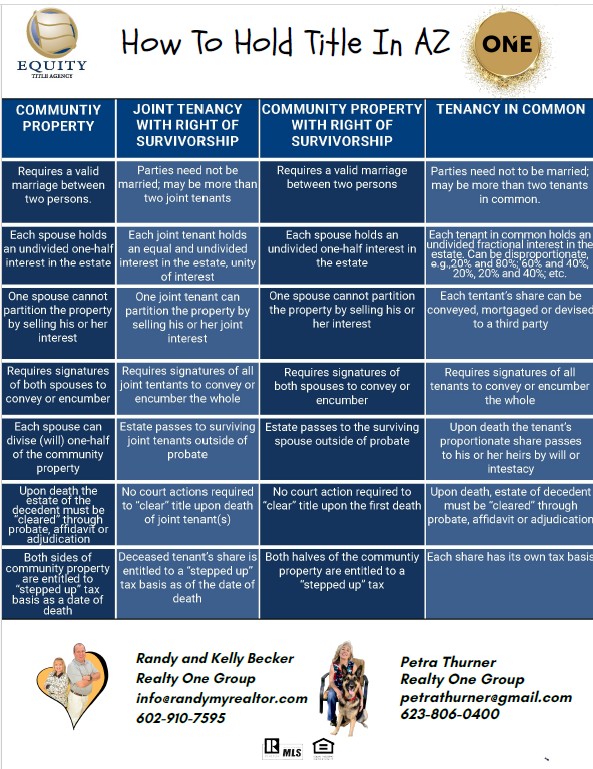
Here are the most common ways to hold title in Arizona, explained in clear terms:
1. Sole Ownership
If you’re purchasing a property alone, you may choose to hold title in your name only. This gives you full ownership and full control of the property. However, when you pass away, the property will typically go through probate unless you’ve made additional estate planning arrangements.
2. Community Property
Arizona is a community property state, which means that if you’re married, any property acquired during the marriage is generally considered owned equally by both spouses. This form of ownership allows each spouse to pass their share of the property to an heir of their choice through a will.
3. Community Property with Right of Survivorship
This option is similar to community property but includes a key benefit: when one spouse passes away, the surviving spouse automatically inherits the deceased spouse’s share of the property—avoiding probate. It’s a popular choice for married couples who want to ensure a seamless transfer of ownership.
4. Joint Tenancy with Right of Survivorship
This method can be used by two or more people, whether they’re married or not. Each owner has equal rights to the property, and if one passes away, their share automatically transfers to the surviving owners. Like community property with right of survivorship, this arrangement avoids probate.
5. Tenancy in Common
Unlike joint tenancy, tenancy in common allows ownership percentages to be unequal. For example, one person could own 70% while another owns 30%. If one owner passes away, their share doesn’t automatically go to the surviving owners—it passes according to their will or estate plan. This option provides flexibility but can create complications if co-owners disagree or if the estate must go through probate.
6. Title Held in Trust
Some homeowners choose to place their property into a living trust. This can be a smart estate planning move, as it allows for smoother transfer of property after death and can help avoid probate altogether.
✅ Why It Matters
The way you hold title affects:
- Control – Who has decision-making authority over the property.
- Taxes – Some forms of ownership allow for favorable tax treatment.
- Inheritance – Who inherits the property and whether it avoids probate.
- Flexibility – Your ability to sell, transfer, or refinance.
Choosing the best option depends on your unique situation—whether you’re buying alone, with a spouse, family member, business partner, or friend.
💡 Pro Tip: Don’t make this decision without guidance. Title companies can explain your options, but only an attorney or qualified tax professional can give legal or tax advice. Always consult with professionals to determine which method aligns best with your financial and estate planning goals.
📲 If you’re planning to buy or sell in Arizona, we can walk you through the process and connect you with trusted professionals to ensure your home is protected from day one.
Let’s connect and discuss your options for holding title in Arizona!
BOTTOM LINE
Choosing how to hold title in Arizona is more than a paperwork detail—it directly impacts ownership, inheritance, and long-term protection of your property. By understanding your options and seeking professional guidance, you can make informed decisions that safeguard your investment and provide peace of mind for the future. Let’s connect today!





 EN
EN
 ES
ES